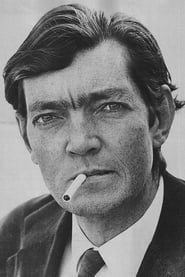
Julio Cortázar
Known for: Writing
Born: August 25, 1914 in Ixelles, Brussels, Belgium - Died: February 11, 1984
Julio Florencio Cortázar (26 August 1914 – 12 February 1984) was an Argentine, nationalized French novelist, short story writer, essayist, and translator. Known as one of the founders of the Latin American Boom, Cortázar influenced an entire generation of Spanish-speaking readers and writers in America and Europe. He is considered one of the most innovative and original authors of his time, a master of history, poetic prose and short story in general and a creator of important novels that inaugurated a new way of making literature in the Hispanic world by breaking the classical moulds through narratives that escaped temporal linearity. He lived his childhood and adolescence and incipient maturity in Argentina and, after the 1950s, in Europe. He lived in Italy, Spain, and in Switzerland. In 1951, he settled in France for more than three decades and composed some of his works there. Julio Cortázar was born on 26 August 1914, in Ixelles, a municipality of Brussels, Belgium. According to biographer Miguel Herráez, his parents, Julio José Cortázar and María Herminia Descotte, were Argentine citizens, and his father was attached to the Argentine diplomatic service in Belgium. At the time of Cortázar's birth, Belgium was occupied by the German troops of Kaiser Wilhelm II. After German troops arrived in Belgium, Cortázar and his family moved to Zürich where María Herminia's parents, Victoria Gabel and Louis Descotte (a French National), were waiting in neutral territory. The family group spent the next two years in Switzerland, first in Zürich, then Geneva, before moving for a short period to Barcelona. The Cortázars settled outside of Buenos Aires by the end of 1919. Cortázar's father left when Julio was six, and the family had no further contact with him. Cortázar spent most of his childhood in Banfield, a suburb south of Buenos Aires, with his mother and younger sister. The home in Banfield, with its back yard, was a source of inspiration for some of his stories. Despite this, in a letter to Graciela M. de Solá on 4 December 1963, he described this period of his life as "full of servitude, excessive touchiness, terrible and frequent sadness." He was a sickly child and spent much of his childhood in bed reading. His mother, who spoke several languages and was a great reader herself, introduced her son to the works of Jules Verne, whom Cortázar admired for the rest of his life. In the magazine Plural (issue 44, Mexico City, May 1975) he wrote: "I spent my childhood in a haze full of goblins and elves, with a sense of space and time that was different from everybody else's". ... Source: Article "Julio Cortázar" from Wikipedia in English, licensed under CC-BY-SA 3.0.
Known for
Showing 24 of 31 titles

IN DEPTH: Julio Cortázar
Himself
The Padilla Affair
Self (archive footage)
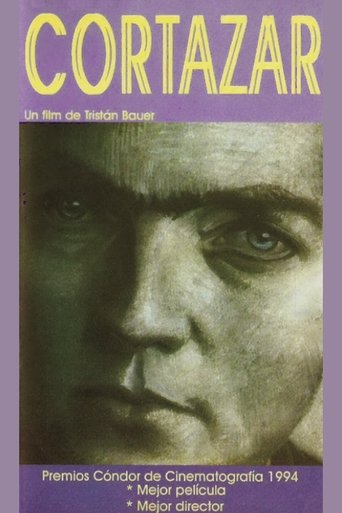
Cortázar
Himself
Blow-Up
Homeless Man (uncredited)
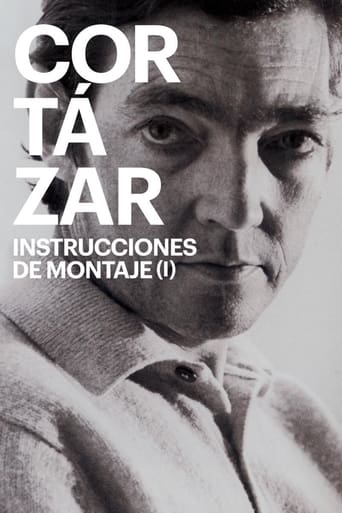
Cortázar: instrucciones de montaje (I)
Mario y los perros
Self - Writer (archivo footage)

Amargo era el postre
Le Grand Échiquier
Self
Furia
Short Story
La Puerta Condenada
Original Story
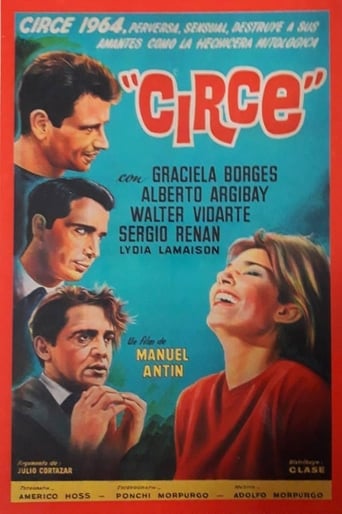
Circe
Writer
Weekend
Short Story
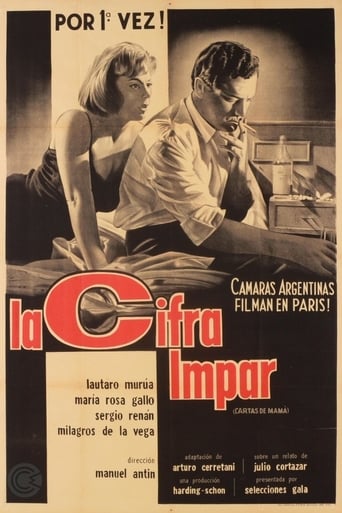
Odd Number
Story
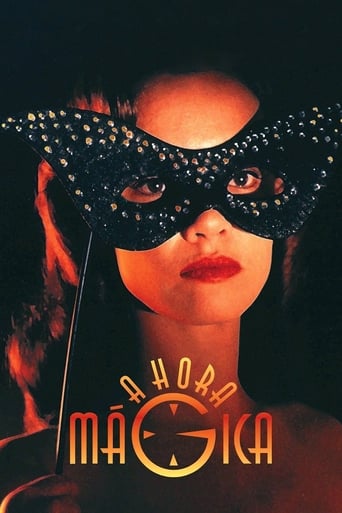
A Hora Mágica
Original Story
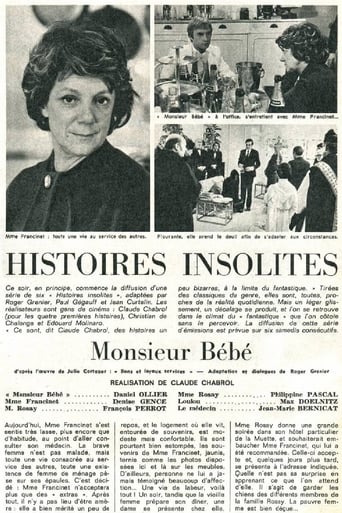
Monsieur Bébé
Novel
Leonora Carrington or The Ironic Spell
Writer
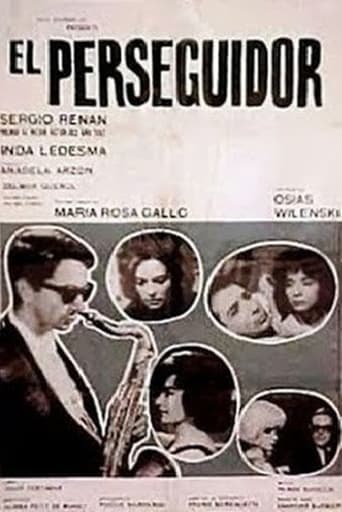
El perseguidor
Story

Serán Legión
Short Story
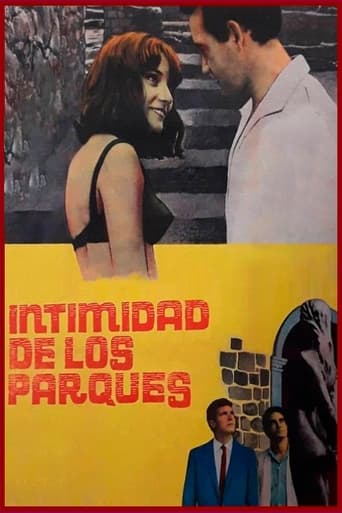
Intimidad de los parques
Story
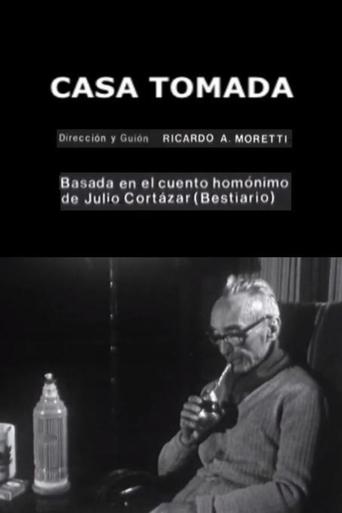
Casa tomada
Short Story
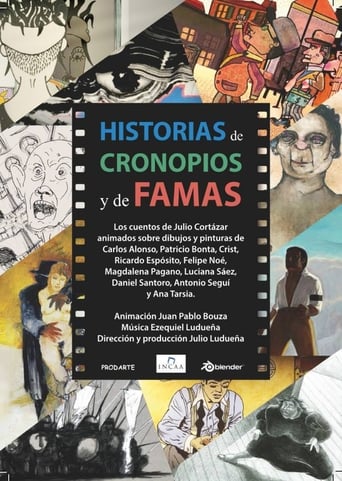
Historias de Cronopios y de Famas
Original Story
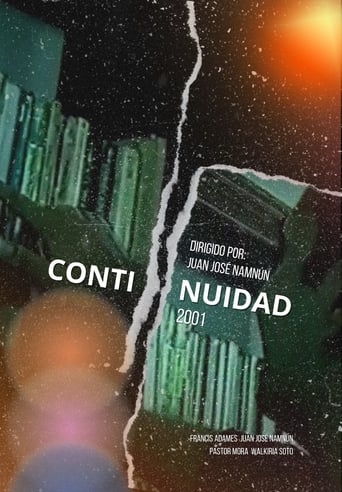
Continuidad
Author
Good Services
Writer

La Continuidad de los Patios
Original Story