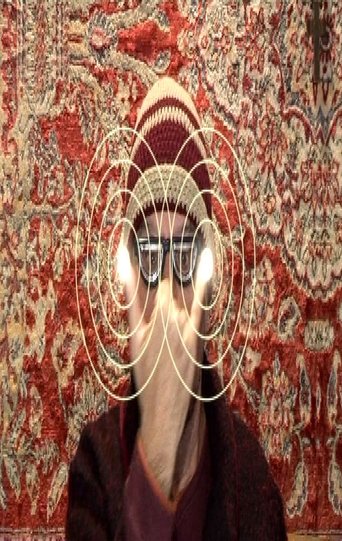
Vasilis Rafailidis
Known for: Acting
Born: December 31, 1933 in Servia, Kozani, Greece - Died: September 7, 2000
Vasilis Raphaelides (Greek: Βασίλης Ραφαηλίδης, January 14, 1934 – September 8, 2000) was a Greek journalist, writer, essayist and film critic. He was born on January 14, 1934 in Servia, Kozani prefecture, and died on September 8, 2000 in Athens. His father's origin was from Constantinople, which he himself recognized as his homeland (mainly because he liked it as a city). Moreover, he had other "homelands". Most notably, Kastoria, where he spent his adolescence, due to his parents' transfer. It is worth noting that his parents were both educators - his father (Apostolos) was a philologist, his mother (Eleni) was a teacher. His mother came from Velvento, Kozani. He studied cinema in 1959 at the Stavrakos School in Athens and after graduating he worked as an assistant to Nikos Koundouros and Roveros Manthoulis, while in 1962 he himself made two short documentary films, The Byzantine Memorial and The Furriers of Kastoria and Their Art. His first film, shot with poor and outdated equipment, was extremely ambitious, but he immediately rejected it as aesthetically unacceptable and from then on he was completely indifferent to its fate, although it was later awarded an international festival. In 1963 he decided to abandon the prospect of becoming a professional director to become a professional film critic. He initially worked in this position in left-wing publications to which he ideologically belonged, initially the Art Review and later in the Democratic Change. He then published the magazine Hellenic Cinema, which was closed by the Junta, only to be republished later under the title Contemporary Cinema. After the change of government, he worked in various newspapers such as To Vima (1974-1983), Ethnos (1983-1998) and Eleftherotypia (1998 until his death in 2000), not limiting himself to film criticism, but writing commentaries and pamphlets that touched on broader political and social issues. He also gave seminars and taught cinema at the Stavrakos School, the Art Theater School, the Goethe Institute and elsewhere. He also worked at a radio station in dialogue programs. During the dictatorship he was tortured and exiled to the prisons of Aegina. He was a conscious Marxist-communist and through some of his books he analyzed Marxist and communist theory in a simple but not simplistic way. He died in September 2000 at the age of 66 from cancer and was buried in Patras. He lived in the historic district of Neapolis on Ippokratous Street.
Known for
Showing 1 of 1 titles