Loading episode...
Select Server:
DW Documentary (2017)
Season 10 • Episode 10 • Martinique: The deadliest volcanic eruption of the 20th century
DW Documentary Season 10, Episode 10: Martinique: The deadliest volcanic eruption of the 20th century
There are around 1,500 known active volcanoes worldwide. A volcano is considered active if it has erupted in the last 10,000 years. Around 40 to 60 volcanoes erupt every year. Watch DW Documentary Season 10, Episode 10 Martinique: The deadliest volcanic eruption of the 20th century in HD free online. Enjoy high-quality streaming of DW Documentary Season 10, Episode 10 and share your thoughts in the comments below!
Comments
No comments yet. Be the first to comment.
Episodes
51 episodes
A revolution in transplant medicine
More donor organs are needed, but too few are available. Could the future of transplant medicine be found in the laboratory? Doctors and scientists around the world are researching ways to produce organs artificially.
43 min
Dictators, drugs, discord - Latin America and the USA (1/3)
43 min
Dictators, drugs, discord - Latin America and the USA (2/3)
43 min
Dictators, drugs, discord - Latin America and the USA (3/3)
43 min
The War of the Worlds - The prophetic novel
H.G. Wells redefined science fiction. "The War of the Worlds” was the first story about an invasion by aliens that simultaneously managed to raise questions about human progress, immortalize Martians, and inspire countless adaptations. This documentary traces how Wells used science fiction as a moral and political fable to criticize colonialism and modernity. Wells also warned of the dangers associated with industrial, scientific, and technological progress.
52 min
Inside the 'Woman, Life, Freedom' protest movement in Iran
43 min
Cities on the ocean
Cities, floating on the ocean. It sounds like science fiction, but could soon become reality. Researchers are developing concepts for life on water - on a grand scale. Initial tests are promising. Is success a genuine possibility?
43 min
Wildlife in the city
Nature often struggles in the concrete jungles of growing cities. But many animals manage to adapt to the new conditions, thanks to changes in behavior, new survival strategies and, sometimes, even genetic changes.
43 min

Opioid crisis in the US - Business & addiction (1/2)
The United States has a huge drug problem: cheap opioids, thousands of deaths. President Trump blames Latin American cartels. But it all began 30 years ago, quite legally, in the United States. Through exclusive interviews, insider accounts and previously unpublished archive material, this two-part documentary reveals how the Sacklers bribed regulators, pushed Oxy and evaded justice despite overwhelming evidence. The two-part documentary tells the story of a crisis that continues to devastate parts of American society to this day.
52 min
Martinique: The deadliest volcanic eruption of the 20th century
There are around 1,500 known active volcanoes worldwide. A volcano is considered active if it has erupted in the last 10,000 years. Around 40 to 60 volcanoes erupt every year.
43 min

Liberland: Crypto paradise or libertarian illusion?
Liberland is a country that doesn’t officially exist. A country that promises voluntary taxes and a lean state. It’s a libertarian utopia that’s finding more supporters worldwide. The Liberland experiment may seem like an oddity, but it also raises serious questions: Cryptocurrencies and decentralized networks are undermining traditional national borders, and radical market ideas are gaining influence. Parallel structures are emerging. Critics see them as a threat to democracy. Others, of course, sense opportunity.
43 min
Humanity in the midst of war - Survival and loss in Ukraine
86 min

Opioid crisis in the US - Business & addiction (2/2)
51 min

What distinguishes humans from animals?
What made our ancestors evolve in such an extraordinary way? This film presents the latest scientific theories on how the human species evolved and looks at the shadow side of our unique abilities.
52 min
The raw materials dilemma: Europe, China, and the Green Deal
Europe wants to encourage economic growth, while also saving our planet from climate collapse. The name of the plan to do this is the "Green Deal.” Under the Green Deal, electric cars are supposed to replace combustion engines, and renewable energies will be used instead of coal, oil, and gas. But green technologies require many critical raw materials, like lithium and rare earths. But these raw materials are rarely mined in Europe anymore. Currently, they come from faraway places like Africa, South America, Russia, and above all, China.
43 min
Toxic colonialism - Secret chemical warfare in Algeria
54 min
The Canary Islands paradox- Desalination plants
Sixty years ago, Europe's first seawater desalination plant was built in the Canary Islands. This technology for producing fresh water was a blessing for the islands. Now, it could prove to be a curse for the ecosystem. This water treatment system is essential for life in the area - but is it compatible with the principles of sustainable development?
43 min

Violence against women in India
In India, more than 80 women are raped every day. This number is probably just the tip of the iceberg. In most cases, the crimes are not reported - whether out of shame, fear of the perpetrator, or mistrust of the police and the justice system. For six months, a camera crew accompanied Kinjal and her family in their search for justice. A glimpse behind the scenes in India, where the violence of the caste system and the weight of tradition determine the lives of hundreds of millions of women.
43 min

Neutrinos: Do they reveal the secrets of the universe?
Smaller than an atom, and able to race through objects at the speed of light: these mysterious particles are called neutrinos. They could possibly hold the key to the existence of all matter. To observe them, scientists must venture into the eerie silence that reigns only in the most remote places on Earth - or at the bottom of the deepest mines. Using computer animations and access to underground observatories in Canada, Japan, and Antarctica, the documentary follows the interstellar journey of a neutrino crossing our planet from the other side of a black hole. This fascinating and metaphysical film provides insight into the history of Earth and reveals how the secrets of the universe could be unlocked if we listen to our planet.
44 min
India - Nuclear Power, space power, economic power?
India has set its sights on becoming an economic global power. For western entrepreneurs, the country could be a feasible alternative to China. But how sustainable is the current boom?
43 min
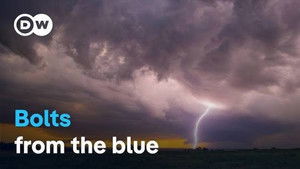
The secrets of lightning
Lightning is a force of nature. Traveling at a speed of 100,000 km/h, with a temperature five times that of the Sun's surface, it strikes the Earth millions of times a day. But what makes lightning? Does it have a purpose? The phenomenon has puzzled generations of scientists for centuries, from Benjamin Franklin to Nikola Tesla. Today, in a bid to unravel its true nature, researchers are trying to achieve something once thought to be impossible: capturing lightning.
44 min
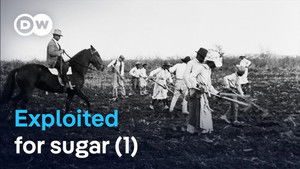
How sugar created slavery (1/2)
Sugar has long played a central role in the global economy. But this lucrative business was also a major driver of both colonialism and slavery. To this day, workers are systematically exploited for sugar production.
43 min
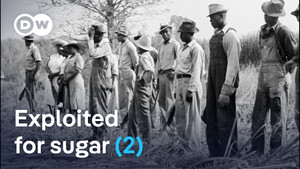
How sugar created slavery (2/2)
Sugar has long played a central role in the global economy. But this lucrative business was also a major driver of both colonialism and slavery. To this day, workers are systematically exploited for sugar production.
43 min
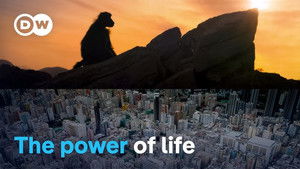
The story of our planet
The documentary shows the evolutionary history of our planet, in which the history of humankind represents only a brief moment. Rocks existed on our planet long before the oceans, forests, plants, and even air came into being. From the very beginning, the earth itself was the foundation of creation. The documentary looks at how inanimate matter created life, shaped landscapes, and gave rise to civilizations.
86 min
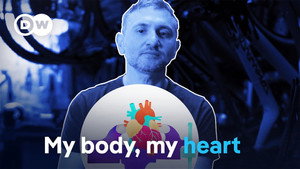
The heart- The most powerful organ in our body?
Women's hearts differ from men's, and often present subtler heart attack symptoms. This can lead to dangerously late diagnoses. Every minute counts in a heart attack: as soon as the blood supply stops, heart tissue begins to die, irretrievably.
43 min
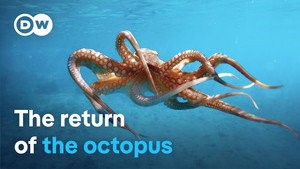
Octopus under threat
Octopus is considered a delicacy - grilled, boiled, or fried. But rising demand has consequences, and in several regions of Europe, this intelligent cephalopod is already considered overfished. The ecological consequences of octopus overfishing are already visible: in Italy, the invasive blue crab is spreading uncontrollably. It is one of the octopus's favorite foods - but without natural enemies, it is now destroying mussel farming in the Po Delta and thus posing a threat to livelihoods.
42 min
The Da Vinci Code - Has the mystery been solved?
Dan Brown's novel "The Da Vinci Code” is one of the century’s most successful thrillers worldwide. But how much truth is behind the claims made in the book - and what is pure fiction?
52 min

Gothic architecture
Gothic architecture emerged in France in the 12th century. This architectural style revolutionized church construction, creating cathedrals that soared skywards. But where did the knowledge and technology for building these monuments come from?
45 min
The German obsession with cars
More than 140 years after its invention, the car remains a source of fascination for many people. In Germany, for example, there are more vehicles on the road than ever before. For some, the car is a cult object. But it also deeply polarizing. Germany is considered the birthplace of the automobile. Here, cars are like the family's favorite child. Many Germans maintain an emotional relationship with motorized vehicles - one explored in this film.
86 min
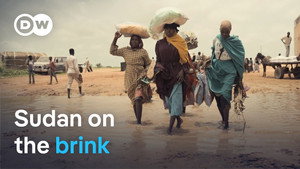
Sudan: The world's biggest humanitarian crisis
In Sudan, the government is waging a bloody civil war against rebels. An estimated 12 million people have fled their homes, either to destinations within the country or to neighboring states. Many of them are seeking help in Chad. It is arguably the world's biggest humanitarian crisis - yet the civil war in Sudan has received little attention from the international community.
52 min
Nano- and microplastics: The invisible danger to the body
All organisms harbor an invisible, omnipresent enemy: plastic. Researchers worldwide have shown that plastic particles can also be detected in humans - in organs and bodily fluids. The documentary shows the current state of research on the harmfulness of microplastics and the consequences for the human species. Micro- and nanoplastics pollute the environment and pose a threat to humans and animals.
56 min

The secret to concentration
Constant stimuli, digital distractions - how can we stay focused these days? Does talent, training, or technology help? Neuroscientists and mental coaches show how concentration works in the brain. In an increasingly demanding world, we seem to be able to concentrate less and less. How does our brain manage to focus, even when we’re constantly exposed to distractions? This documentary accompanies a top athlete, an air traffic controller trainee, and an e-sports professional on their journeys in search of maximum focus.
43 min

Dangerous apps- In the web of data brokers
What many smartphone users know: the apps on their phones collect detailed location data. What few people know: the information often ends up with a global network of data brokers and advertising companies.
52 min
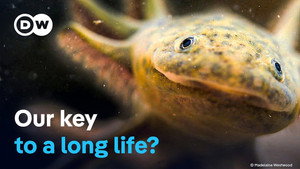
Axolotl
The axolotl, a tailed amphibian, is a marvel of evolution. It can regenerate injured body parts and is exceptionally long-lived. However, the axolotl's habitat is now under serious threat. The latest census revealed that fewer than a hundred specimens exist in the wild.
43 min
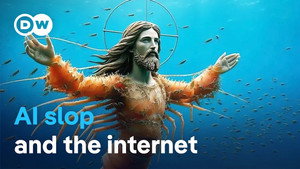
Will AI lead to the death of the internet?
The internet is being flooded with AI-generated garbage. Disinformation, propaganda, a flood of synthetic images and sounds. Will we soon only be getting information that AI feeds us?
52 min
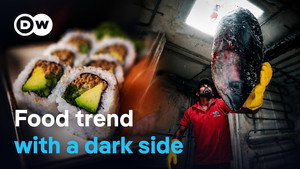
The sushi hype- Ravenous appetites and species extinction
Sushi: Once an expensive gourmet food, now a global fast-food phenomenon. Whether you get it from an Asian snack bar or a supermarket to-go box, sushi is trendy. But sushi consumption also brings problems. Overfishing through aggressive fishing methods, factory farming and modern slave labor are all part of the dark side of the great sushi craze.
43 min

Our memory- A phenomenal storage system
Our memory also makes us who we are. The experiences and feelings we’ve stored, the knowledge we’ve retained - all of this connects us to ourselves and our past. But how can we improve our memory and make it more efficient? How can we keep it fit and healthy? What happens when it fails us?
43 min

Peru- Life at extreme altitudes above 4,000 meters
The Peruvian Altiplano is one of the most extreme habitats in the world. Located over 4,000 meters above sea level, the region attracts millions of visitors - and pushes many of them to their physical limits. But for tens of thousands of people, the highlands are everyday life.
44 min
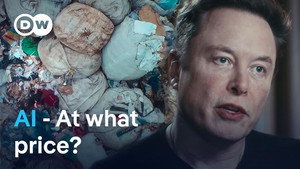
The dark side of AI- Exploitation of humans and nature
While tech companies promise us a better future, AI is already causing serious harm. Huge data centers and server farms are required for AI programs to function. These are paving over landscapes and consuming immense amounts of water and electricity — mostly from fossil fuels, and thus dirty energy sources. Millions of low-wage workers worldwide are busy feeding data to, and training, the algorithms for AI programs — often at the expense of their mental and emotional health. These workers, many of them young and living in the Global South, are exposed to all manner of harmful content to train AI models to detect such material.
54 min
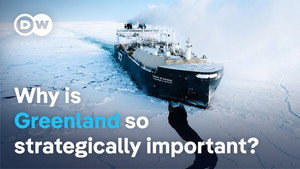
Trump and Greenland- The new rush for raw materials
Ever since Donald Trump started talking about acquiring Greenland, the country has become the focus of global attention. Why? As the ice sheets melt, the Arctic Ocean is opening up to shipping and resource extraction. Greenland is thus becoming a key strategic region between North America, Europe and Russia. Its vast mineral resources - ranging from oil and gas to gold and rare earths, which are indispensable for the energy transition and the defense industry - are turning the island into a new El Dorado. Mining companies and world powers alike are competing for a share.
52 min
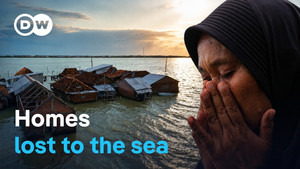
Displaced on Java- A village battling rising sea levels
So far, the residents of the village of Timbulsloko in Java have been able to keep pace with the rising sea levels by building their homes on higher ground. How long can that go on for? Where once roads and vast rice fields stood, there's now nothing but water. The ocean has carved deep into the land, washing away everything in its path: Homes, gardens, mangrove forests. For generations, people here lived mainly from rice farming. Now they fish, and are experimenting with aquaculture. Residents here are struggling to contain the impacts. How long can they stop the water from disrupting their day-to-day living? At which point will they be forced to leave?
52 min
Hitler's invasion of the Soviet Union: Operation Barbarossa (1/2)
43 min
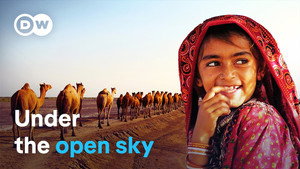
India's last nomads
This film tells the story of Ahmed and his family, camel herders in the deserts of western India. For generations, they’ve roamed the barren land with their animals, leading lives shaped by tradition and nature. But this way of life is coming under increasing pressure: industrialization, climate change and economic challenges are rapidly transforming the region and threatening the future of nomadic life.
52 min

Nikola Tesla - The visionary who invented our future
Nikola Tesla, born in 1856 in what is now Croatia, was one of the world’s greatest inventors. He developed numerous innovations in the field of electrical engineering and was granted over 280 patents, many of them in the USA.
54 min
Hitler’s invasion of the Soviet Union: Operation Barbarossa (2/2)
43 min

Illegitimate children in Iran - Invisible and without rights
Leyla loves her daughter Nila more than anything. But there’s a problem: according to Iranian law, Nila does not exist. Because she is an illegitimate child, she has no papers or rights. Mother and daughter must fight the absurd rules of a disingenuous regime. But the resourceful duo refuse to give up. They hope to become part of Iranian society and save Nila from a life in hiding. "Nila's Dream in the Garden of Eden" accompanies Leyla in her struggle to achieve recognition of her daughter Nila's identity. Until then, she cannot obtain papers, go to school or receive medical care. The doors of Iranian society are closed to her.
86 min
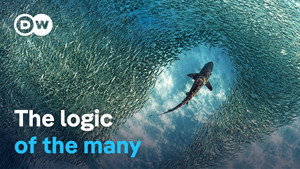
From bees to robots: The new power of swarm intelligence
Researchers are investigating how animals behave in swarms. Their findings are being applied to robotics, logistics and new models of participation — and are opening up new perspectives for business and democracy.
51 min

From Latin America to Europe- Human traffickers
Women in Latin America are recruited with brutal methods, then enslaved in Europe. A survivor recounts how she was lured to Spain with the promise of a job, then forced into prostitution.
43 min

America's war for freedom - 250 years of independence
In 1776, America was torn: between loyalty to the British Crown, and its own desire for independence. 250 years later, digitized eyewitness accounts provide insights into daily life during the War of Independence for the first time.
87 min
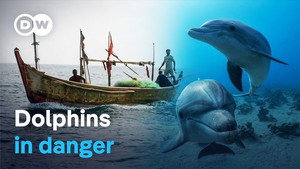
Illegal dolphin hunting
Humans kill more than 100,000 dolphins worldwide each year. Many end up as bycatch in fishing nets. Others are hunted down. Japan, the Faroe Islands and West Africa are three places where the animals are slaughtered. Dolphins play an important role in marine ecosystems, but their numbers are dwindling. About one third of dolphin species are endangered. Researchers are monitoring their behavior and raising public awareness by visiting local schools and teaching children about the need to protect the species. Can this effort aid in the protection of Africa's dolphins?
29 min
Flatpack forests - IKEA’s practices in the Carpathian Mountains
IKEA is one of the world’s largest consumers of wood. Almost 15 million cubic meters of the material are used every year in cheap IKEA products — with millions of trees felled for the mass production machine. IKEA Loves Wood ('IKEA elsker træ') is a Danish investigative documentary from 2024 that looks at IKEA's forestry practices in the Rumanian Carpathian Mountains — an area with some of the last old-growth forests of Europe. Biologists, environmental groups and local activists say the Swedish furniture giant’s timber production is having a significant impact on old-growth forests and biodiversity. IKEA, however, states that it doesn’t tolerate illegal or unethical practices and that its suppliers are carefully selected.
58 min